If the AI programming tools of the past two years focused on the question of "how fast can it write code," then after 2025, the real differentiator will be something else entirely: whether the model truly understands engineering, and not just syntax. In this respect, the emergence of Qwen3 Coder is clearly not a conventional upgrade, but rather a shift in strategic direction.
As a model branch within the Tongyi Qianwen system specifically designed for programming tasks, Qwen3 Coder no longer positions itself as a "Copilot replacement," but instead aims to become an AI coding partner capable of participating in design, understanding context, and even assisting in decision-making.
This difference is clearly reflected in Qwen3 Coder's model structure, inference methods, and API design.
Qwen3 Coder's Model System: Not just "large," but "clearly defined roles"
Currently, Qwen3 Coder is not a single model, but a family of models tailored to different scales and deployment scenarios.
Qwen3-Coder-480B-A35B-Instruct-FP8 is a very "engineering-oriented" version. Through FP8 precision inference, it significantly reduces inference latency and memory usage while maintaining capabilities close to the original model. The existence of this version itself demonstrates that Qwen3 Coder is not a laboratory model, but is explicitly designed for high-concurrency, production environments. This layered modeling approach contrasts sharply with the "one model fits all" strategies adopted by many foreign counterparts.
From "Completing Code" to "Understanding the Project": The Real Differentiator of Qwen3 Coder
In practical use, the most significant change in Qwen3 Coder is not its ability to write complex algorithms, but rather its approach to understanding the engineering context.
When you ask it to modify a piece of code, it often implicitly analyzes: Where does this logic fit within the entire system? Are there any implicit dependencies? Will the changes affect the interface contract? This "understand first, then act" behavior is especially crucial in large projects.
In debugging scenarios, Qwen3 Coder also tends to provide a "chain of causes" rather than just a single point fix. Instead of simply telling you "there's an error here," its more common output is: the context in which the error occurred, why it was triggered in this branch, and how to adjust the architecture to avoid similar problems.
This capability makes it significantly more valuable than traditional code completion tools for tasks such as code review, refactoring, and technical debt analysis.
Qwen3 Coder API: Designed for Real Engineering, Not Just Demos
In terms of API design, Qwen3 Coder is clearly geared towards the real needs of engineering teams.
It supports the standard Chat Completion format, but its prompt organization clearly distinguishes between system/developer/user roles, making it ideal for building automated coding agents, code review bots, or intelligent nodes in CI processes.
A typical use case for the Qwen3 Coder API is not "write me a function," but rather something like:
"This is a module from an existing codebase, here are the relevant file summaries. Now, a new feature needs to be introduced without breaking existing interfaces. Please provide a modification plan and generate the corresponding code."
This type of task is essentially very close to real-world development, not just a model demonstration.
A Real Comparison with Mainstream Coding Tools
If we place Qwen3 Coder within the current landscape of mainstream international AI programming tools, its position is quite clear.
GitHub Copilot remains the "king of code completion experience," incredibly smooth in its instant response and single-line completion within the IDE, but its understanding of complex contexts and cross-file logic is still limited, making it more suitable for high-frequency, low-complexity tasks. Cursor and Claude Code offer a great experience in "conversational code modification," especially suitable for independent developers and rapid prototyping. However, stability and consistency remain challenges in very large codebases and under enterprise-level constraints.
GPT-4.1 / GPT-4o remains strong in general reasoning and algorithm design, but its cost and controllability make it more suitable as an "external brain" rather than infrastructure deeply embedded in the development process.
In contrast, Qwen3 Coder's advantage lies in:
It's more like a code model that can be engineered, deployed, and managed, not just a SaaS tool. This is very significant for enterprise users and serious development teams.
A change is underway: the way programmers work is being restructured.
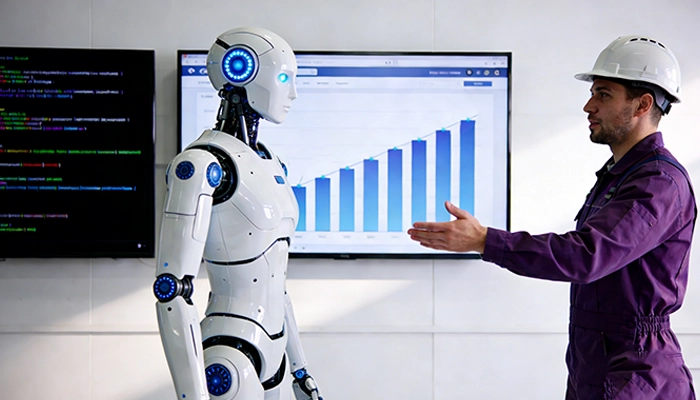
The emergence of models like Qwen3 Coder is quietly changing the focus of programmers' work.
More and more time is no longer spent on "how to write code," but on "how to define the problem," "how to verify the solution," and "how to design system boundaries." AI is responsible for quickly translating ideas into runnable code, while human developers are responsible for judging whether the direction is correct.
This is not about programmers being replaced, but about their roles being upgraded.
Conclusion: Qwen3 Coder is not just a tool, but a signal.
From Qwen3 Coder's model design, engineering orientation, and API capabilities, the signal it sends is very clear:
The next stage of AI programming is no longer about faster code completion, but about deeper understanding.
For developers and teams who want to remain competitive in the coming years, whether or not to use Qwen3 Coder is not the key; the key is whether they have already begun to adapt to this new paradigm of "collaborative programming with AI."
And Qwen3 Coder is one of the few models currently truly built for this paradigm.