

RoCEv2 Networking
Get the best RDMA Networking purposely built for AI
RoCEv2 Networking
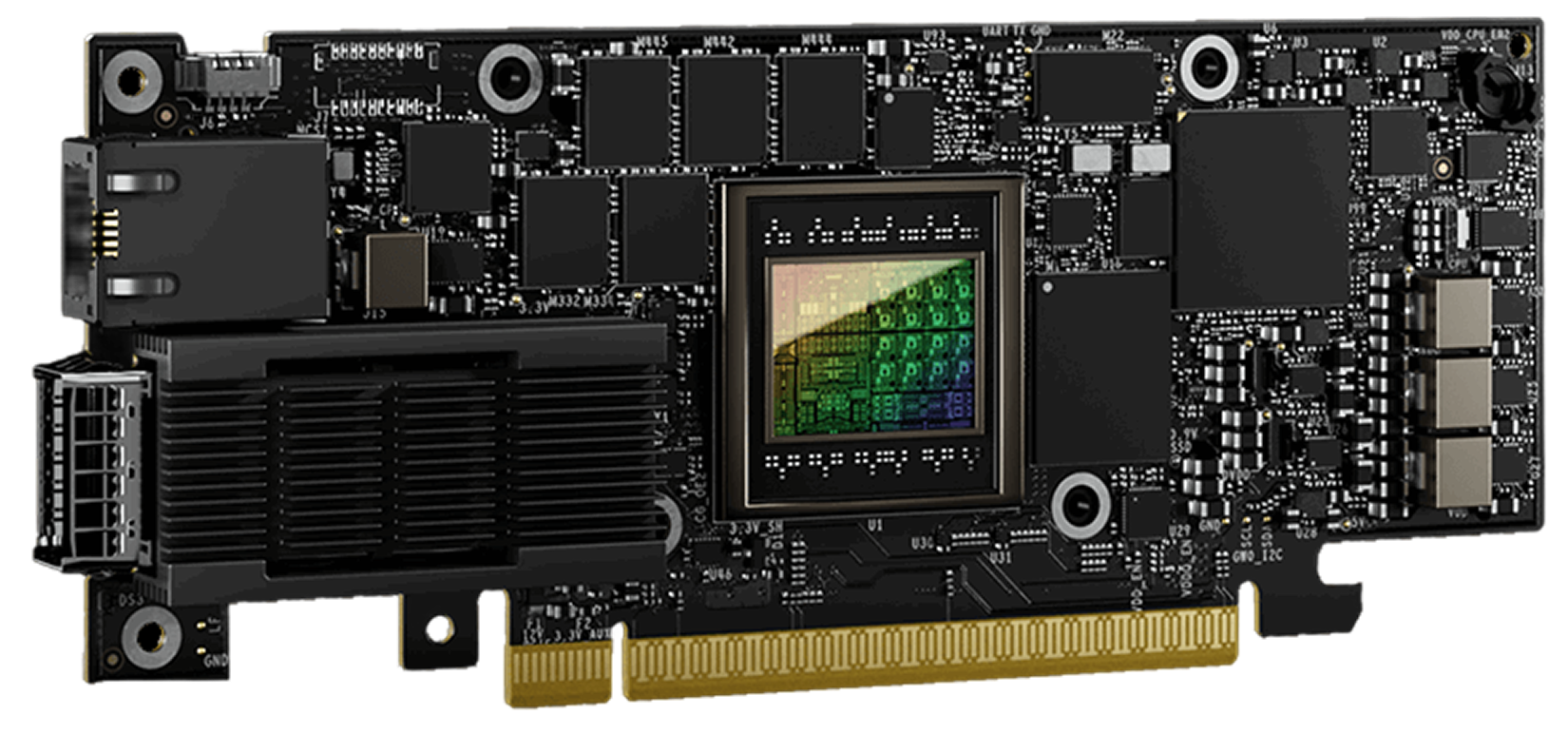
Create virtual, accelerated networks to manage your cloud resources on Canopy Wave—powered by NVIDIA BlueField-3 DPUs. Securely and efficiently connect compute, storage, and everything else for GenAI

High Performance
RDMA bypasses the CPU for data transfers, reducing latency and CPU overhead

Excellent for AI Workloads
Used in distributed AI training systems where fast GPU-to-GPU communication across nodes is needed

Hardware Acceleration
RoCEv2 further improves data transmission efficiency with the help of hardware acceleration technology

Advanced Congestion Control
We build our RoCEv2 Networking to improves network stability and performance. It can better adapt to high-load, low-latency application scenarios

Scalability
RoCEv2 is hardware-independent and can better adapt to different hardware environments
RoCEv2 Network Cards
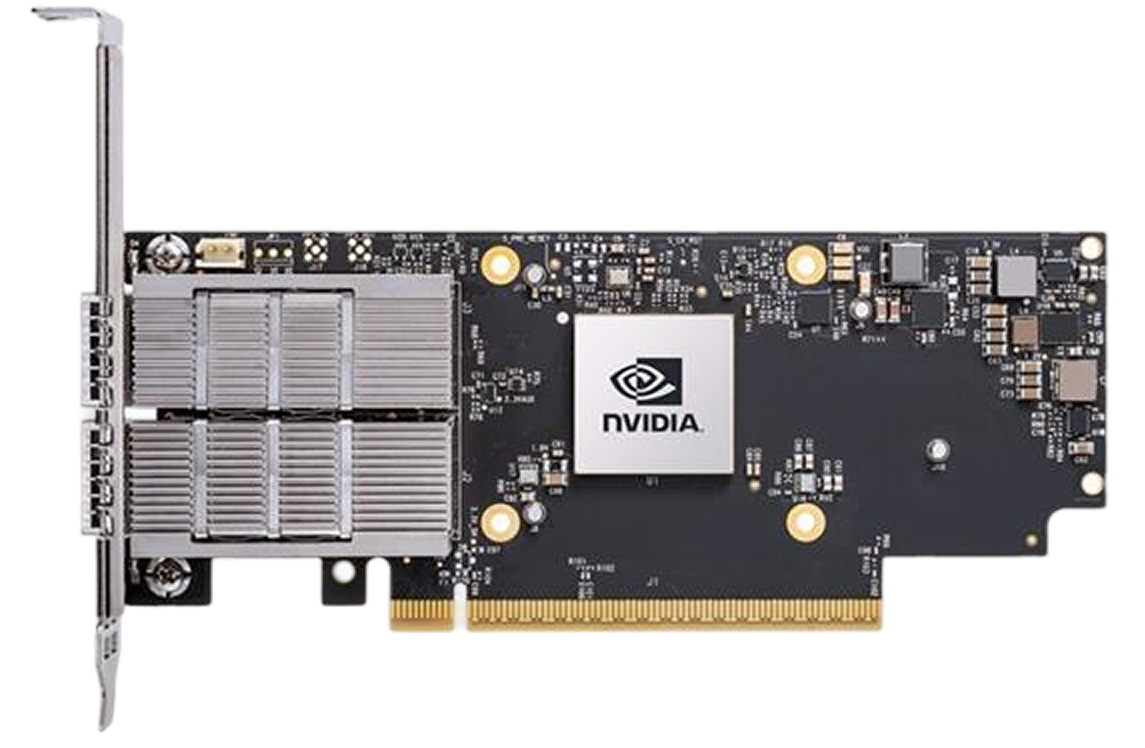
The ConnectX-7 SmartNIC (HCA) delivers ultra-low latency, 400Gb/s throughput, and the innovative NVIDIA Network Compute Acceleration Engine to further accelerate applications. ConnectX-7 provides the scalability and feature-rich technology required for supercomputers, artificial intelligence, and hyperscale cloud data centers
Advanced Congestion Control
In RDMA communication, data is transferred directly from the memory of the sender to the memory of the receiver without the involvement of an operating system or CPU. This feature makes RDMA more demanding on network latency and reliability, and is especially sensitive to network packet loss and latency
Congestion Detection
Real-time monitoring and detection of network congestion to ensure stable data transmission
Packet Loss Recovery
Automatic mechanisms to recover from packet loss, improving reliability for critical workloads
Adaptive Rate Control
Dynamically adjusts data transfer rates to match network conditions and avoid congestion
End-to-End QoS
Guarantees quality of service for latency-sensitive applications. Ensures performance for critical workloads
Remote Direct Memory Access
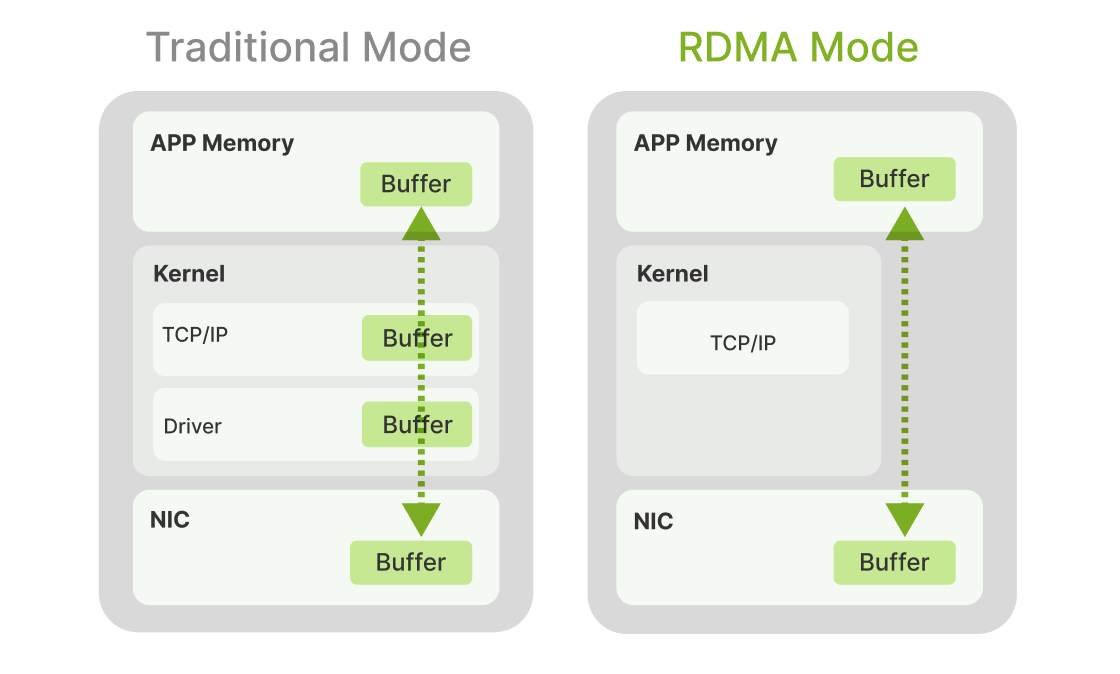
RDMA (Remote Direct Memory Access) means that external devices can bypass the CPU and access the user-mode system main memory on another remote host
- • Ultra-low latency for faster data transfer
- • Reduces CPU usage and frees up compute resources
- • High throughput, ideal for large-scale data exchange
- • Supports distributed and high-performance computing scenarios
- • Optimizes network resource utilization
RoCEv2 vs InfiniBand
Both RoCEv2 and InfiniBand are high-performance networking technologies. RoCEv2 is based on Ethernet, making deployment simpler, cost lower, and compatibility stronger—ideal for AI, big data, and cloud computing scenarios. InfiniBand offers excellent performance but requires dedicated equipment,is focused on delivering perfect performance, and has limited scalability. RoCEv2 is the preferred choice for enterprises and cloud environments
RoCEv2 vs InfiniBand
| Feature | RoCEv2 | InfiniBand |
|---|---|---|
| Deployment Difficulty | Need to configure the network card | No extra configuration required |
| Cost | Low, Less equipment required | High, requires full set of equipment |
| Compatibility | Supports mainstream Ethernet | Only supports dedicated networks |
| Performance | low latency, high throughput | Ultra-low latency, high throughput |
| Scalability | Excellent, easy for large-scale deployment | Limited by dedicated hardware |
Performance Comparison
Network Latency
Network Bandwidth
InfiniBand excels in ultra-low latency scenarios (~1.6 μs), while RoCEv2 offers competitive latency (2-4 μs with optimization) and equal bandwidth (400G)
How Much Can RoCEv2 Save?
RoCEv2 offers significant cost savings compared to InfiniBand, especially for large-scale deployments. Below are the average market prices for each solution (per port, 400Gbps):
RoCEv2 (400Gbps)
InfiniBand (400Gbps)
RoCEv2 saves up to 30% on networking costs compared to InfiniBand
Robust Supply Chain & Equipment Sourcing
Canopy Wave’s supply chain control and vendor relationships mean less waiting and more doing. Whether you're sourcing GPUs, networking gear, or storage systems, we take the hassle out of procurement and help you access the hardware you need—faster and at scale

99.9% Uptime & 24/7 Support
Your AI workloads need to run around the clock, and so do we. With 99.9% uptime, enterprise-grade reliability, and 24/7 support, you can trust your infrastructure to stay online—and your team to stay productive

Full-Stack DCIM & Operational Visibility
Get complete transparency with our Data Center Infrastructure Management (DCIM) tools. From power and cooling to GPU utilization and system health, our intuitive dashboards give you real-time insights and control over every layer of your infrastructure

Start building at Scale—Today
Canopy Wave’s private cloud solution gives you the power of hyperscale infrastructure, the speed of startup execution, and the peace of mind of enterprise support—all delivered with precision and purpose
Production-grade Security
and Data Privacy
We have passed dual SOC 2 Type I & Type II certifications. Covering compliant control design and long-term operational security validation, we eliminate data leakage and abuse risks to deliver trustworthy, compliant and reliable data protection for all enterprises.
Get started today
Create your Canopy Wave cloud account to launch GPU clusters immediately or contact us to reserve a long term contract.