- Targets 3–6 month core deployment cycles for high-density AI infrastructure
- Uses a factory-prefabricated, site-assembled approach to accelerate deployment and simplify phased expansion
- Extends Canopy Wave's infrastructure capabilities from data center design and construction through GPU deployment, operations, and AI inference
AI infrastructure is evolving faster than traditional data center construction can keep up.
Pursuant to the definitive business combination agreement with SAIHEAT, Canopy Wave is positioned to integrate SAIHEAT’s modular data center design and construction capabilities with Canopy Wave’s existing GPU infrastructure and AI inference platform.
Designed around factory-prefabricated power, cooling, and supporting infrastructure, Canopy Wave’s modular approach targets core deployment cycles of approximately 3–6 months, helping customers bring AI compute capacity online faster and better align infrastructure deployment with rapid GPU technology cycles.
Together, these capabilities are intended to create a more integrated infrastructure stack spanning data center design, construction, GPU deployment, operations, and AI inference.
From Site-Built to Site-Assembled
Traditional data center construction depends heavily on sequential on-site work across power, cooling, networking, and supporting infrastructure.
A modular data center takes a different approach.
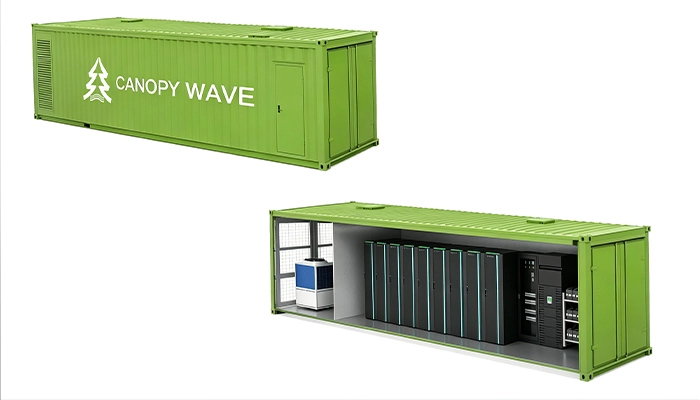
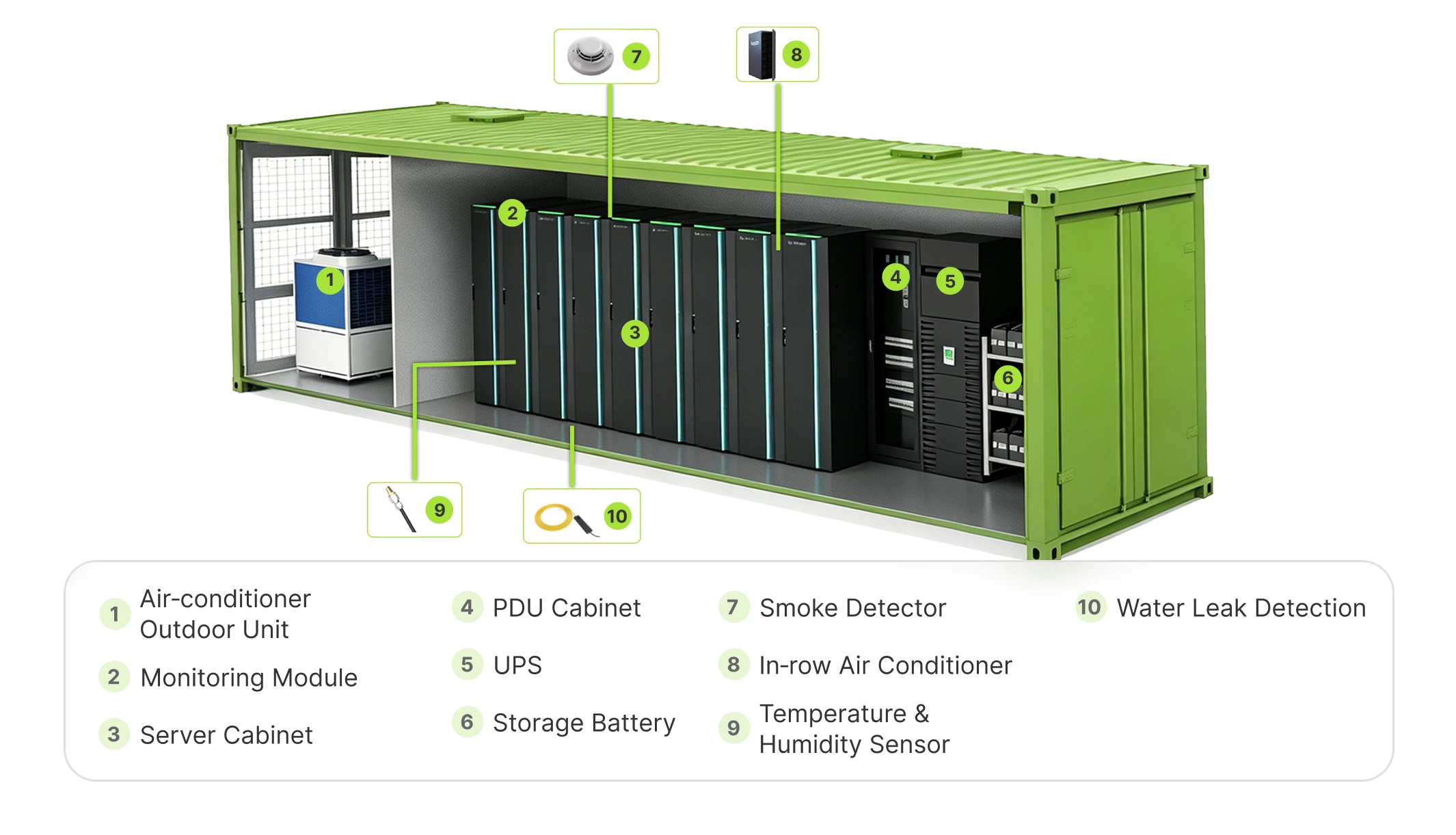
Mechanical, electrical, liquid-cooling, and power distribution systems are standardized, pre-integrated, and factory-tested before being transported to the deployment site for final assembly.
This changes the delivery model from:
site-built → site-assembled
By moving a large portion of engineering and integration work into a controlled factory environment, site preparation and equipment manufacturing can progress in parallel rather than sequentially.
The result is a more predictable and repeatable infrastructure delivery process.
Why Modular Matters for AI Infrastructure
The value of modular infrastructure is not simply that it is faster to build.
It is that faster deployment allows infrastructure to stay closer to the pace of GPU innovation.
Canopy Wave’s modular approach is designed around three key advantages:
1. Faster Deployment
Canopy Wave targets a core deployment cycle of approximately 3–6 months, compared with significantly longer timelines for traditional data center construction.
Shorter delivery cycles allow customers to deploy infrastructure within the current GPU technology cycle instead of waiting through multiple generations of hardware evolution.
For enterprises deploying next-generation GPU infrastructure, this can materially reduce the risk of infrastructure becoming outdated before workloads are fully deployed.
2. Factory-Level Standardization
Canopy Wave’s modular architecture is designed around a high degree of factory prefabrication.
Power distribution, liquid cooling, mechanical systems, and supporting infrastructure can be pre-integrated and tested before arriving on site.
This reduces dependence on complex on-site construction and helps improve consistency across deployments.
Standardization also makes future expansion easier: new capacity can be added using the same modular architecture rather than redesigning the infrastructure from the ground up.
3. Built for High-Density GPU Environments
AI infrastructure places very different demands on data centers than traditional enterprise workloads.
High-density GPU clusters require:
- advanced liquid cooling
- high-capacity power distribution
- high-speed networking
- cluster-level monitoring
- operational redundancy
- infrastructure designed for future GPU generations
Canopy Wave’s modular data center architecture is designed specifically around these requirements.
Rather than adapting a traditional data center for AI workloads after construction, the physical infrastructure is designed from the beginning for large-scale GPU deployment.
Modular vs. Traditional Data Center Construction
| Core Metric | Traditional Liquid-Cooled DC | Canopy Wave Modular Approach |
|---|---|---|
| Core Deployment Cycle | ~30 months | 3–6 months (measured in months, not years) |
| Factory Prefabrication Rate | Low; heavy dependency on on-site labor | 90% |
| Construction Timeline Reduction | Baseline | 50% |
| Phased Scalability | Limited; high cost to retrofit/expand | Seamless handoff from initial to future phases |
The difference is not only speed. A more standardized, factory-prefabricated approach can also reduce on-site complexity, improve deployment consistency, and support more flexible phased expansion.
From Modular Data Centers to Full-Stack AI Infrastructure
Modular data centers are one part of a larger AI infrastructure stack.
By adding modular data center design and construction capabilities, Canopy Wave is extending its infrastructure coverage across the full deployment lifecycle:
Design → Build → Deploy → Operate
At the physical layer, this includes power, cooling, data center infrastructure, and GPU cluster deployment.
At the compute layer, it extends into GPU infrastructure, cluster operations, and AI inference.
Together, these capabilities create a more integrated path from physical infrastructure to AI workloads — and ultimately from power to token.
Building the Infrastructure Behind the Token
NVIDIA CEO Jensen Huang has described the shift from traditional data centers toward AI factories, where tokens become the output of computing infrastructure.
That shift changes how AI infrastructure should be built.
The question is no longer only:
How much compute can a data center host?
It is also:
How quickly can power be converted into deployed GPUs, usable compute, and ultimately AI output?
This is the idea behind Canopy Wave’s broader vision:
From Power to Token.
Power → Data Center → GPU Cluster → Compute → Inference → Token
By expanding into modular AI data centers, Canopy Wave is building a more complete physical foundation for that value chain—designed to move at the speed of AI infrastructure itself.