
In the era of rapid artificial intelligence (AI) development, we often marvel at ChatGPT's intelligent responses, the precise navigation of autonomous driving, or the revolutionary breakthroughs in medical diagnostics. But do you know that behind this “intelligence” lies a little-known cost—water resources? Yes, AI doesn't just "drink" electricity; it also "drinks" water. The massive water consumption by data centers to cool servers is quietly exacerbating the global water crisis. So, how much water does ai use? Imagine: training a model like ChatGPT-3 could consume up to 5 million liters of water just for cooling, equivalent to a small town's weekly water usage. According to the latest reports, water usage in AI-related data centers is growing at an astonishing rate, even threatening drinking water supplies.
Why does AI use water? Why is AI so "Thirsty"?
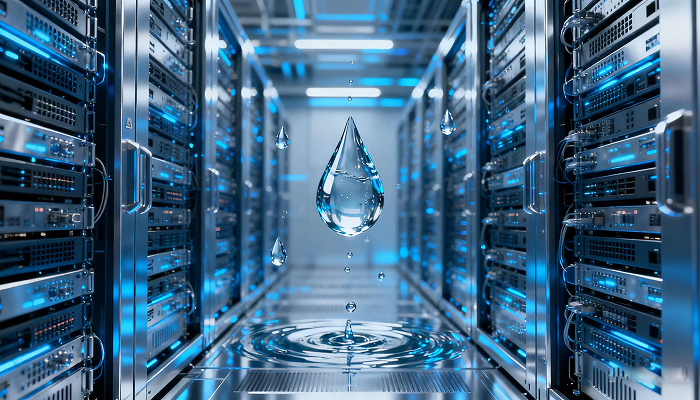
How does AI use water? AI's "drinking habit" stems from the operational mechanisms of data centers. Training a large AI model (such as the GPT series) requires thousands of servers running at high speed, generating enormous amounts of heat under heavy loads. To prevent overheating, data centers typically use water-cooling systems—water circulates through pipes to absorb heat, then evaporates or is discharged back into the environment. This evaporative cooling technology is efficient, but it also causes large amounts of water resources to "evaporate" and disappear, making them irrecoverable. When data centers scale up, this water consumption issue intensifies dramatically.
How much water does AI use?
Specifically, the AI training and inference processes can cause server temperatures to soar above 70 degrees Celsius; without cooling, the equipment would fail rapidly. Traditional water-cooling systems rely on evaporative towers: hot water contacts air, and water evaporates to carry away heat, but this can require 1.8 to 12 liters of water per kilowatt-hour of energy consumption, depending on the regional climate. To put this in perspective, a typical 100-megawatt data center "drinks" about 2 million liters of water per day, equivalent to the daily water usage of 6,500 Americans. Globally, data centers are projected to consume 560 billion liters of water in 2025, potentially doubling by 2030. This water doesn't come from an "unlimited supply" but is drawn from rivers, lakes, or groundwater sources, especially in arid regions, directly impacting local ecosystems.
These figures are not alarmist; they come from the latest 2025 monitoring by authoritative institutions. Giants like Google and Microsoft have begun disclosing partial water usage reports, but overall transparency still needs improvement. For example, over the past three years, more than 160 new AI data centers have emerged in the United States, often built in regions with intense water resource competition, further amplifying the problem.
Regional "Pain Points" of the Water Crisis and Deeper Impacts
AI water usage issues are not evenly distributed but are concentrated in water-stressed regions. The western United States and Midwest have become "disaster zones," while global emerging hotspots are increasingly prominent. This is not just an environmental issue but also involves social equity and economic sustainability.
| Region | Specific Impact | Data Source |
| Western United States (e.g., Arizona) | Meta's data center in Goodyear consumes massive amounts of water, threatening local groundwater and causing a 20% rise in residents' water costs. | APM Research Lab, 2025 |
| Illinois/Midwest | AI data center cooling water may deplete drinking water sources in the Great Lakes region, affecting millions of residents and sparking local protests and policy reviews. | Great Lakes Advocacy Group, 2025 |
| Global Emerging Hotspots | Many new data centers are built in water-scarce areas, such as parts of the Middle East or Africa, further exacerbating local water shortages and even impacting agricultural irrigation. By 2030, AI infrastructure is projected to consume 1.1 to 1.7 trillion gallons of freshwater. | Martins & Amorim Report, 2025 |
The UK government's sustainability report also warns that AI is expected to drive a significant increase in global water usage, especially in arid climates. Imagine: while AI helps us predict climate change, it itself accelerates water resource depletion—this is not irony, but reality. Deeper impacts include: on the social level, drinking water shortages in drought-affected communities may trigger health crises and migration waves; economically, companies face higher water fees and regulatory fines. It is projected that by 2028, U.S. data centers will account for 12% of national electricity usage—and power generation itself consumes vast amounts of water, further intensifying water stress and ultimately driving up water prices indirectly.

How to solve ai water consumption? Outlets and Innovative Practices for Sustainable AI
The good news is that the tech industry is taking action. Companies can reduce AI's "water footprint" through the following strategies, which have proven effective in 2025, not only lowering ai water consumption but also improving operational efficiency.
The World Economic Forum recommends that companies start by measuring emissions, using efficient models, and complying with ISO 42001 standards to ensure AI's full lifecycle sustainability.
At Canopy Wave, we deeply understand that sustainability is the cornerstone of innovation. Therefore, our data centers are strategically located in Iceland, this land rich in geothermal and hydroelectric resources, ensuring that the power sources are predominantly from renewable geothermal energy and hydropower. This environmentally friendly energy configuration not only minimizes carbon footprints to the greatest extent but also provides stable, low-cost power for AI operations. On this basis, our Power Usage Effectiveness (PUE) is as low as 1.03, far superior to the industry average, helping to significantly reduce energy waste.
Conclusion: Take Action to Safeguard AI's Future
Now you know why and how much water does AI use. AI's rise should not come at the expense of Earth's resources. Facing the 2025 water crisis, each of us—from developers to users—should reflect and act. AI's "thirst" may be hidden, but it is real and urgent: if not controlled, global water security will face severe challenges by 2030. However, through technological innovation and collective efforts, we can turn the crisis into an opportunity, making AI a guardian of water resources rather than a consumer.